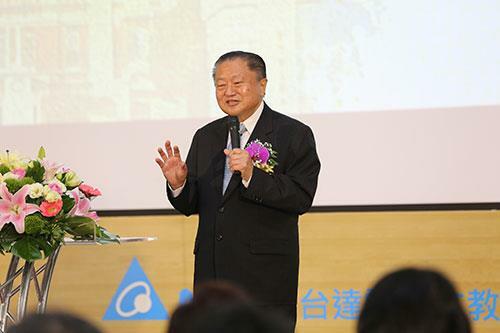
The quiet engineer who built a green giant in global electronic
Born in 1936 in China’s Fujian province, Bruce Cheng grew up in a country still shaped by the aftermath of war, before emigrating at a young age to Taiwan with his family. There, he completed his secondary education and earned a degree in electrical engineering from National Cheng Kung University. He began his career as a technician at Air Asia, an aerospace maintenance company based in Tainan, where he rose through the ranks in production and quality control. He then joined TRW, holding various engineering roles and learning American manufacturing standards, an experience that shaped his technical discipline and led him to a lasting conviction: energy control would be central to future industrial competitiveness.
In 1971, he founded Delta Electronics in a small Taipei workshop. The company initially produced television components, particularly deflection coils, to meet booming demand in Asia’s consumer electronics sector. By 1975, Delta had become a joint-stock company, expanded its technical teams, and laid a solid organizational foundation. That first decade served as a testing ground: Bruce Cheng refined his industrial methods, sharpened his sense of technological shifts, and quietly prepared for strategic diversification. As electronics became more demanding, he foresaw the limitations of traditional transformers and anticipated growing demand for more efficient power solutions. In 1983, Delta began producing switching power supplies, a pivotal technical shift that turned a small-scale business into a serious power electronics player. In 1988, the company went public on the Taiwan Stock Exchange, gaining financial strength, professionalized governance, and the resources needed for global expansion.
Between 1988 and 2000, Cheng led the company through sustained growth. Delta diversified into brushless fans and thermal management components, surpassing $1bn in annual revenue during the 90s. He spearheaded Delta’s first manufacturing expansions outside Taiwan, into Southeast Asia, the U.S., and Europe, with a clear goal: to bring production closer to clients while maintaining quality. He structured the company around three core principles he personally championed: vertical integration, engineering discipline, and energy efficiency. The latter quickly became a priority. Cheng introduced internal environmental standards well before they were market requirements and steered R&D toward low-consumption, reliable products. His leadership gave Delta a clear head start on sustainability, at a time when few industrialists viewed it as a competitive factor.
Starting in the 2000s, Delta underwent major transformation. The company became a global provider of solutions in power electronics, thermal management, industrial automation, data center infrastructure, EV charging, and renewable energy. Still serving as chairman, Cheng guided this shift. He directed the group toward sustainability: Delta published its first ESG reports in 2005, built energy-efficient facilities, and integrated climate targets into corporate governance. In 2012, he stepped back from daily operations but remained honorary chairman. His long-term thinking, industrial discipline, and commitment to the energy transition helped shape Delta’s DNA as a global leader in responsible innovation.
Delta is now recognized as one of the world’s leading providers of cooling solutions for data centers, particularly those dedicated to artificial intelligence (with a 90% market share), and expects to triple its revenue in this segment by 2026, driven by growing demand for energy efficiency and high-performance components.
In parallel, Cheng launched a structured philanthropic initiative in 1990 by founding the Delta Electronics Foundation. His goal: to channel the company’s success into broader social value. The foundation focuses on energy education, environmental awareness, and research into sustainable technologies. Under his leadership, Delta has supported the construction of green buildings, funded climate scholarships, and participated in international forums such as COP21. More than a one-off commitment, this philanthropic work reflects Cheng’s view of industry as something useful, responsible, and embedded in society.
Bruce Cheng lives in Taipei, home to Delta Electronics’ headquarters. He is married and has two children. His eldest son, Ping Cheng, joined the company in 1988, became CEO in 2012, and was appointed chairman in 2024.
At 89, Bruce Cheng is a Taiwanese industrialist and the founder of Delta Electronics, now one of the world’s leading companies in power electronics and energy efficiency. His fortune is estimated at $7.2 bn. (source: Forbes, January 2026)
In a few figures :
- Headquartered in Taipei, Taiwan
- Founded in 1971
- 2025 Revenue: $14.9 bn
- Market capitalization: $78 bn
- R&D investment: +8% of annual revenue
- 90% market share in liquid cooling
- Global leader in power components, motors/inverters, and cooling for AI servers
- 30%+ CAGR expected from 2025 to 2028 across AI, electric vehicles, data centers, and green energy markets
Global Electronics Sector :
- The global power electronics market is estimated at $45 bn in 2025, with an average annual growth rate of 6 to 8% through 2030, driven by the energy transition, electric mobility, and industrial digitalization.
- Global demand is fueled by the electrification of uses, the digitalization of infrastructure, and the rise of renewable and recyclable energy sources.
« To provide innovative, clean, and energy‑efficient solutions for a better tomorrow. »